

·défauts d'emballage: Coutures fragiles ou palettes de mauvaise qualité lors des longs trajets.Dans un cas précis, un acheteur européen a changé de fournisseur suite à des réclamations répétées concernant la qualité de la saumure. Le nouveau partenaire (garantissant une traçabilité complète) a non seulement résolu les problèmes de texture, mais a également contribué à adapter la saumure aux goûts locaux.Tendances du marché et raisons de la croissance continue de la demandeLe marché mondial du maïs doux en conserve poursuit sa croissance soutenue, porté par la praticité, l'urbanisation et le besoin d'aliments à longue conservation. La demande croissante du secteur de la restauration, le développement des marques de distributeur et l'intérêt pour les ingrédients végétaux polyvalents contribuent tous à cette croissance saine.
Les acheteurs des marchés émergents apprécient particulièrement la longue durée de conservation — aucune réfrigération n'est nécessaire avant ouverture — ce qui contribue à gérer les difficultés d'approvisionnement.
Section FAQ étendue
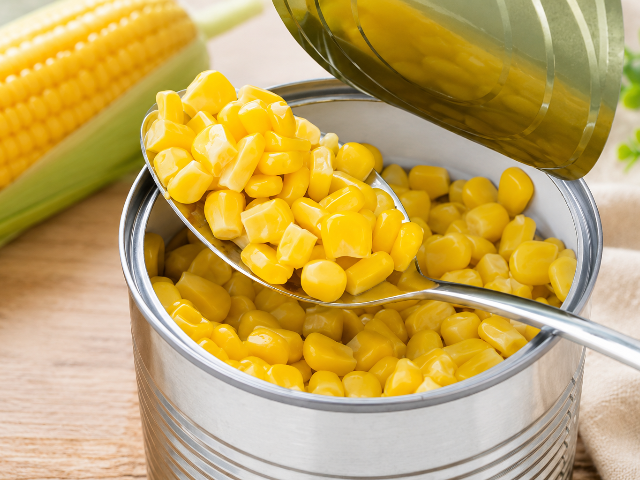
Quelle est la différence concrète entre le maïs doux en conserve de 425 g et celui de 400 g ?
Ils sont très similaires. Le poids net indiqué est généralement de 425 g sur de nombreux marchés internationaux, tandis que celui de 400 g est fréquent sur d'autres. Le poids après égouttage est comparable. Choisissez en fonction des normes de vente au détail de votre marché cible.
Le maïs doux en conserve est-il plus sain que le maïs frais ou surgelé ?
Bien transformé, il conserve d'excellentes qualités nutritionnelles. Fibres, antioxydants et vitamines sont préservés. Privilégiez les versions à faible teneur en sodium si vous surveillez votre consommation de sel. De nombreux experts soulignent qu'il est souvent plus pratique et moins gaspilleur que le maïs frais hors saison.
Comment dois-je conserver les boîtes de conserve, qu'elles soient ouvertes ou non ?Non ouvert : À conserver dans un endroit frais et sec, jusqu’à 3 ans. Ouvert : Transférer dans un récipient en verre ou en plastique, conserver au réfrigérateur et consommer dans les 3 à 4 jours.
Puis-je obtenir des formulations personnalisées via un OEM/ODM ?Oui. Des fabricants expérimentés comme Amoytop proposent des options de personnalisation : teneur en sucre et en sel, taille des grains, options bio et emballage. Les quantités minimales de commande sont souvent flexibles pour les acheteurs sérieux.
Quelles certifications dois-je rechercher lors de l'importation ?Normes HACCP, ISO, HALAL et BRC/IFS pour la qualité, ainsi que toutes les exigences spécifiques au pays de destination (FDA, conformité UE, etc.). Demandez des rapports d'audit tiers.
Comment utiliser au mieux le maïs en grains en conserve dans les recettes ?Salades, salsas, gratins, pizzas, soupes, riz frit et pâtisseries. Il excelle aussi bien dans les préparations chaudes que froides.
Comment évaluer la qualité des fournisseurs avant de passer une commande importante ?Demandez des échantillons, visitez le site virtuellement ou en personne si possible, visionnez les vidéos de production, consultez les certificats et commencez par un échantillon. Veillez à la constance de la qualité entre les lots.
Existe-t-il des allergènes ou des problèmes courants ?Le maïs doux en conserve nature est généralement bien toléré par les personnes allergiques (maïs, eau). En cas d'allergies importantes, vérifiez toujours l'étiquette afin d'éviter toute contamination croisée.
En conclusion : choisir la qualité est essentiel.
Les conserves de maïs doux de 425 g et 400 g restent des solutions de choix car elles offrent praticité, fiabilité et un goût excellent lorsqu'elles sont de qualité. La différence entre une conserve ordinaire et une conserve d'exception tient souvent à l'expérience du fournisseur en matière de production, à son souci du détail lors de la transformation et à sa capacité à personnaliser les produits grâce à de solides compétences en matière de fabrication à façon (OEM/ODM).
Des entreprises comme Amoytop Foods, avec leurs usines intégrées, leurs marques établies et leur approche axée sur l'exportation, comprennent parfaitement ces subtilités. Elles ne se contentent pas de remplir des boîtes de conserve ; elles aident leurs partenaires à bâtir des gammes de produits fiables.
Si vous évaluez des options pour la vente au détail, la restauration ou les marques de distributeur, privilégiez les partenaires capables de vous accompagner tout au long du processus, de la sélection du maïs à la livraison finale. Un maïs doux en conserve de qualité ne se contente pas de prendre la poussière sur une étagère : il simplifie la préparation des repas, les rend plus savoureux et plus réguliers, jour après jour.
Prêt à discuter des spécifications pour votre marché ? Contactez des producteurs reconnus pour obtenir des devis, des échantillons et des informations sur les possibilités de personnalisation. Un approvisionnement fiable en maïs en grains de qualité en conserve est l'un de ces choix discrets qui facilitent le bon fonctionnement de votre entreprise.
1. Harvesting and Receiving: Mechanical harvesters pick ears at optimal maturity. Trucks deliver directly to the plant where incoming loads are inspected for quality.
2. Husking and Cleaning: High-speed machines remove husks and silk. Cobs are thoroughly washed to remove debris.
3. Kernel Cutting: Automated cutters strip kernels from the cob. Precision here matters—too aggressive and you get broken pieces; too gentle and yield drops.
4. Blanching: Brief hot water or steam treatment inactivates enzymes, sets color, and preserves texture and nutrients.
5. Filling and Brining: Clean kernels go into pre-sterilized cans with controlled amounts of water or light brine. Overfilling or underfilling affects final drained weight and quality.
6. Sealing and Retorting: Cans are sealed and then sterilized under high pressure and temperature (retort process) to achieve commercial sterility.
7. Cooling and Packaging: Rapid cooling prevents overcooking. Cans are labeled, packed into cartons, and palletized for shipment.
We’ve visited lines where thousands of cans per minute move through. One small delay in any step—say, slower cooling—can turn crisp kernels mushy. That’s why working with factories that control the full chain makes such a big difference.
Amoytop’s dual-factory setup (south and north China) gives them access to different growing regions and harvest windows, ensuring steadier supply throughout the season.
Nutritional Profile and Health Angle: What the Data Shows
Canned sweet corn often gets unfairly compared to fresh. In reality, it holds its own nutritionally. A typical 100g serving of drained canned sweet corn provides:
· Around 2g dietary fiber (supporting digestion)
· Good source of folate, vitamin C (though some loss from processing), and B vitamins
· Antioxidants like lutein and zeaxanthin for eye health
· Natural carbohydrates for energy
Because it’s packed at peak ripeness, some nutrients are actually better preserved than in fresh corn that’s shipped long distances and sits on shelves. Many health-conscious buyers now choose low-sodium or no-salt-added versions for better dietary fit.
In B2B contexts, we see increasing demand from baby food manufacturers and health-focused ready-meal producers who appreciate the clean-label potential when working with experienced ODM partners.
Real-World Applications: Beyond Basic Side Dishes
What many buyers overlook is just how versatile canned kernel corn really is. It’s not just “heat and serve.”
Home kitchen scenarios:
· Toss drained corn into green salads or pasta salads for natural sweetness and color.
· Mix into cornbread batter or casseroles where the moisture helps texture.
· Quick tacos or quesadillas—drain, season, and done.
Commercial and foodservice uses:
· Pizza toppings and sandwich fillings (holds up well under heat).
· Soups, chowders, and stews where it adds body.
· Mixed vegetable blends for institutional feeding programs.
· Ready-to-eat meal kits popular in urban markets.
One Middle Eastern distributor we know uses 425g cans in their private-label corn and bean salad line. Customers love the consistent plump kernels that don’t turn to mush after mixing. Another client in Southeast Asia incorporates it into stir-fried dishes with local spices— the slight crunch contrasts beautifully with softer ingredients.
Pro tip from the production side: If you’re using corn in delicate recipes, give it a light rinse to reduce sodium and packing liquid taste. For creamy dishes or baked goods, keep some of the liquid—it adds starch and body.
Packaging Engineering and Export Considerations
This is where things get tricky for new importers. Not all tins are created equal. Strong double seams, proper lacquer lining to prevent corrosion, and robust outer cartons matter enormously during sea transport, especially to humid tropical markets.
Amoytop and similar experienced exporters pay close attention to these details. They offer mixed container loading, different lid styles (easy-open vs standard), and pallet configurations optimized for container space.
We’ve seen shipments from less careful suppliers arrive with dented cans or label peeling due to moisture. Choosing partners with proven export experience and strong quality systems (HACCP, IFS) reduces these headaches significantly.
Common Challenges Buyers Face and How to Solve Them
Here’s a reality check: Not every can on the market delivers the same experience.
· Mushy texture: Often from over-blanching, slow cooling, or wrong variety. Solution: Work with suppliers who harvest specific sweet corn hybrids bred for canning.
· Starchy or bland taste: Corn harvested too late or delayed processing. Look for producers who emphasize speed from field to can.
· Inconsistent drained weight: Leads to recipe failures in commercial kitchens. Reputable factories maintain tight fill standards.
· Packaging failures: Weak seams or poor pallets during long voyages.
In one case, a European buyer switched suppliers after repeated quality complaints. The new partner (with full traceability) not only fixed the texture issues but also helped customize brine for local taste preferences.
Market Trends and Why Demand Keeps Growing
The global canned sweet corn category continues expanding steadily, driven by convenience, urbanization, and the need for shelf-stable foods. Rising foodservice demand, private label growth, and interest in versatile plant-based ingredients all support healthy category growth.
Buyers in emerging markets particularly value the long shelf life—no refrigeration needed until opened—which helps manage supply chain challenges.
Expanded FAQ Section
What is the actual difference between 425g and 400g canned sweet corn? They are very similar. 425g is a common labeled net weight in many international markets, while 400g appears frequently in others. Drained weights are comparable. Choose based on your target market’s retail norms.
Is canned sweet corn healthy compared to fresh or frozen? It retains excellent nutrition when processed correctly. Fiber, antioxidants, and vitamins hold up well. Opt for low-sodium versions when watching salt intake. Many experts note it’s often more practical and less wasteful than fresh corn out of season.
How should I store unopened and opened cans? Unopened: Cool, dry pantry—up to 3 years. Opened: Transfer to a glass or plastic container, refrigerate, and use within 3-4 days.
Can I get custom formulations through OEM/ODM? Yes. Experienced manufacturers like Amoytop offer adjustments in sweetness, salt content, kernel size, organic options, and packaging. MOQs are often flexible for serious buyers.
What certifications should I look for when importing? HACCP, ISO, HALAL, BRC/IFS for quality, plus any destination-specific requirements (FDA, EU compliance, etc.). Ask for third-party audit reports.
Best ways to use canned kernel corn in recipes? Salads, salsas, casseroles, pizzas, soups, fried rice, and baked goods. It shines in both hot and cold applications.
How do I evaluate supplier quality before placing a large order? Request samples, visit virtually or in-person if possible, check production videos, review certificates, and start with a trial container. Pay attention to consistency across batches.
Are there any common allergens or concerns? Plain canned sweet corn is generally allergen-friendly (corn, water). Always check labels for facility cross-contact if you have severe sensitivities.
Final Thoughts: Choosing Quality Matters
425g and 400g canned sweet corn remain go-to solutions because they deliver convenience, reliability, and great taste when sourced properly. The difference between an average can and an outstanding one often comes down to the supplier’s real production experience, attention to detail in processing, and willingness to customize through strong OEM/ODM capabilities.
Companies like Amoytop Foods, with their integrated factories, established brands, and export-focused approach, understand these nuances deeply. They don’t just fill cans—they help partners build dependable product lines.
If you’re evaluating options for retail, foodservice, or private label, focus on partners who can show you the full journey from field selection to final shipment. The right canned sweet corn doesn’t just sit on a shelf—it makes meals easier, tastier, and more consistent, day after day.
Ready to discuss specifications for your market? Reach out to established producers for current quotes, samples, and customization possibilities. A reliable supply of quality canned kernel corn is one of those behind-the-scenes choices that makes everything else in your operation run smoother.